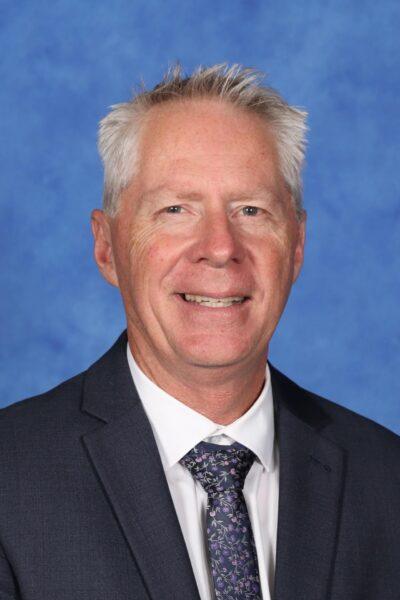
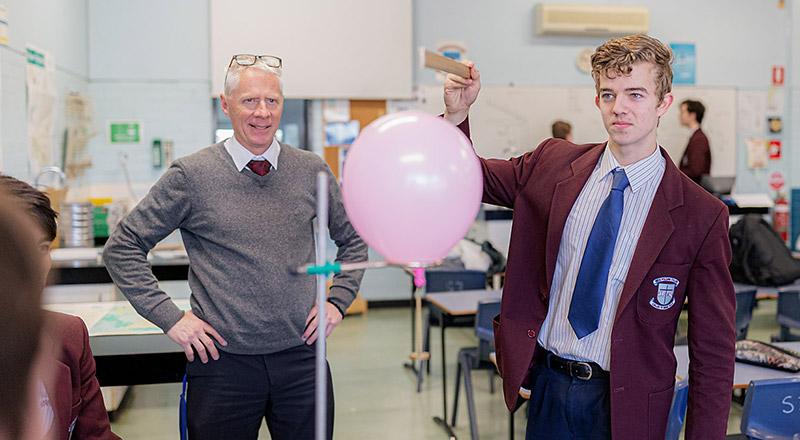
Steve Lans has been a guiding force at Bede Polding College, South Windsor where his passion for science, care for the environment and commitment to faith in action have left a lasting impact on students and staff alike. As Science Leader of Learning and coordinator of the College’s Eco Group, Steve brings learning to life by helping students make meaningful connections between scientific concepts, the natural world and their responsibility as stewards of creation.
Known for his generosity, humility and willingness to serve the community, Steve has played a key role in shaping environmental initiatives, spirituality programs and reflective experiences inspired by Laudato Si’. In this Teachers Who Inspire Q&A, Steve reflects on his journey into teaching, the moments that have shaped his career, and how science, faith and stewardship continue to guide his work in the classroom and beyond.

What inspired you to become a teacher?
I fell into it by chance. I wanted to be a Ranger with the National Parks and Wildlife Service, which required gaining experience through temporary contracts, and had no permanent job. Two of my brothers worked at Holy Family High School in Marayong and they convinced me to apply for a Science teacher position. I had just graduated with a Bachelor of Applied Science in Natural Resources and had no teaching experience or qualifications. I quickly grew to love teaching, particularly when I learned a few strategies for controlling classes. What first inspired your love for teaching Science, and how has that passion shaped the way you motivate and support your students today?
I love seeing the light bulb moments when students relate a scientific principle they have just learned to something with which they are familiar. Through teaching Science I have made many of those connections myself and I love being able to interpret the landscape and explain what I see in daily life in scientific terms. I try to give my students the same passion and understanding and have accumulated a lot of analogies and examples over the years to facilitate this.
Can you share a moment in your career where you really felt you made a difference?
I once got a postcard from an ex-student sent from Canada, somewhere within the Arctic Circle. He was studying methane emissions from the melting permafrost, which required him to camp in the field with a portable steel fence around his tent and a shotgun to deter polar bears. He said his passion to pursue a PhD in that field had begun in my Earth and Environmental Science class.
Is there a story from your time teaching that has inspired you or had a deep impact on you?
I teach Earth and Environmental Science (EES). My degree gave me a good understanding of the environmental part of the course, but I didn’t have much experience in the field of geology. The more I learn, the more I love it. It seems to be a neglected part of most people’s education and yet so fundamental to understanding our landscape, how we use it and how we impact upon it. It gives me great enthusiasm for teaching it.
Can you share a moment when you saw a student’s confidence or skills transform and felt that your teaching had made a lasting difference?
I frequently hear students say that they didn’t realise they were good at Science. In EES, students often have to think in a different way. We look at the landscape four dimensionally – two dimensions on the surface, what’s below the surface and how it changes over time. It’s different from the linear approach in many other subjects. Students can also explain themselves using diagrams, which suits those who do not write well.
As a result, a large number of my students have developed a passion for EES and gone on to study it at university and work in the field. It gives me great satisfaction to see them thrive in a wide variety of careers.
What’s the most rewarding part of teaching in a Catholic school?
I work closely with our Religion department on staff and student spirituality days where there is a stewardship theme. Our year 9 spirituality days for the last few years have included activities involving planting native trees, making terrariums from waste material and learning about climate change and what we can do to reduce it. Our staff spirituality days have included a kayaking activity to clean up the Hawkesbury River and a day in the Blue Mountains where I planned a range of bushwalks for all levels of ability.
Our school does a great job of making cross-curricular links. We discuss the issues caused by the waste we generate in Science, the Eco Group coordinates the emptying of our recycling bins and the cans and bottles they collect go to Vinnies to raise money for their charitable work. Senior RE classes get involved in tree planting activities and Clean Up Australia Day.