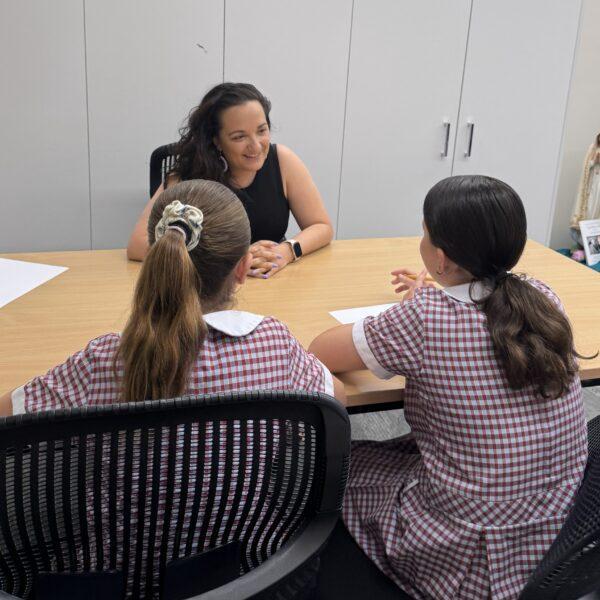
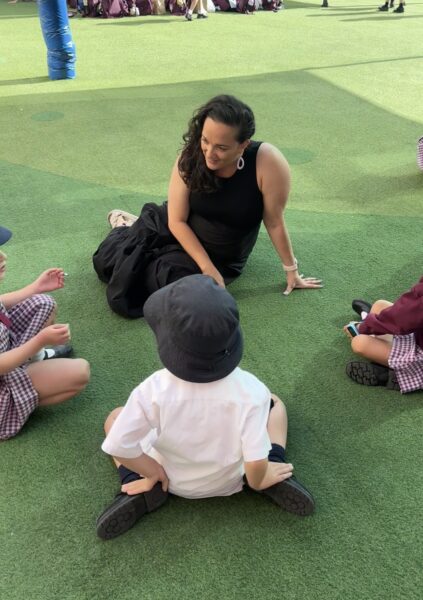
Assistant Principal and Year 6 teacher at Fr John Therry Catholic Primary School, Balmain, Bianca Manton has 21 years in teaching and seven in leadership across Sydney Catholic Schools. She is passionate about helping every student thrive academically, emotionally, and spiritually.
Guided by her faith, she mentors future leaders, leads initiatives that build teacher confidence, and supports students facing barriers, viewing teaching as both a profession and a vocation. For Bianca, Catholic education is about forming the whole child, fostering servant leadership, and preparing young people to live with faith, purpose, and compassion.
What inspired you to become a teacher?
My primary inspiration for becoming a teacher stems from a deep love and passion for seeing all children grow in every facet of their lives, alongside an unwavering belief that all students can thrive. I find immense joy in nurturing that growth and helping every child reach their full potential. From a young age, I found great satisfaction in assisting other students to learn. This began early, as I tutored several primary-aged, diverse learners in Mathematics and Science while I was in early high school.
Beyond the direct impact on students, I also enjoy the richness and diversity of the role itself. This is especially true within a Catholic school environment, where our work extends beyond academics – we are specifically called to be disciples. This broader mission gives the role a profound sense of purpose, blending professional fulfilment with a spiritual calling to serve and inspire the community.
Can you share a moment in your career where you really felt you made a difference?
One of the most significant moments occurred during a Sydney Catholic Schools Mathematics initiative from 2018–2020, where I worked under the leadership of Dr Christine Mae. I collaborated across the diocese with numerous teachers and school leadership teams to strengthen pedagogy and mathematical content knowledge.
I witnessed a transformation – teachers who were once hesitant to teach Mathematics became confident leaders within our education system, some of whom I now work directly with. Simultaneously, students with negative mindsets about the subject began to thrive and became learners who craved mathematics, saw themselves as confident and resilient, and were engaged. These shifts – from fear to enthusiasm – in both students and teachers are the moments I truly felt I made a lasting difference.
Is there a story from your time teaching that has inspired you or had a deep impact on you?
Rather than a single student story, the most deeply impactful experiences have come from working under a variety of leaders throughout my career. I’ve gained invaluable lessons from observing a diverse range of leadership styles – those that were highly effective, those that presented professional challenges, and those that prompted rapid growth.
This constant exposure gave me a nuanced understanding of school leadership. While my work in Mathematics allowed me to influence curriculum, the story that holds the deepest significance is being mentored by principals who were genuinely invested in me. Their ongoing support was – and continues to be – instrumental in nurturing my development not only as a classroom teacher but also as a leader.
I was so inspired by their trust and belief that I’ve since adopted the same approach with my own teams, actively mentoring teachers and leadership members to help them realise their potential, who will hopefully become our future leaders. This demonstrates that a leader’s confidence and investment in an individual can be the single greatest driver of professional inspiration and growth.
Can you share a moment when you saw a student’s confidence or skills transform and felt that your teaching had made a lasting difference?
One of the most impactful experiences in my career came when I worked with a student facing significant barriers to attendance and academic engagement. To provide the support needed to get them through the school gates, I had to completely adapt my teaching practices and understanding of how students learn, allowing not only for flexible entry into the classroom but also for a reimagining of what success looked like each day. This meant creating a safe, welcoming space where connection came before content, and where the student’s emotional readiness guided the pace and structure of learning. Over time, I witnessed a profound shift – from avoidance and anxiety to gradual re-engagement and pride in achievement. Their journey reminded me that when we meet students where they are, with compassion and flexibility, we unlock pathways to growth that traditional models often overlook.
How does your faith shape your teaching approach?
My personal faith, formalised when I completed the Rite of Christian Initiation of Adults (RCIA) program at 21, profoundly shapes my approach to education. For me, teaching is not simply a job – it is a calling and a vocation, requiring me to lead with humility and a constant focus on service.
This perspective means that faith isn’t confined to Religious Education; it is embedded in all areas of school life. My core purpose is nurturing the whole child – academically, spiritually, and emotionally. This holistic philosophy is beautifully captured in Pope Leo’s recent messages, ensuring our schools are places where children grow in wisdom, dignity, and love, prepared to be active, compassionate members of the wider world.
What’s the most rewarding part of teaching in a Catholic school?
My decision to teach in a Catholic school is driven by the unique opportunity it provides to speak openly and honestly about Christ’s love for everyone. In today’s world, there are few places where spiritual and moral formation can be so deeply integrated into the daily curriculum and school culture.
Having attended a public school myself up until Year 12, I understand the value of that experience and credit it to the person I am today. However, I also see the clear point of difference that a Catholic school offers compared to other educational organisations. It provides a foundation of faith and values that informs every interaction, nurtures a sense of community, and enables us to educate the whole person, preparing students to lead lives of service and purpose.
What do you think is the most valuable role Catholic education plays in today’s society?
I believe the most valuable role Catholic education plays in today’s society is its commitment to nurturing the whole child and fostering servant leadership.
Unlike many educational settings, Catholic schools are built on the foundational premise that teaching is a vocation and a calling. This allows us to deeply embed faith, morality, and service into all aspects of school life. My personal experience, including working under a variety of leaders and witnessing the transformative power of mentorship, has reinforced my belief that we must develop students who are not only academically capable but also confident, resilient, and morally grounded.
The system’s most significant contribution is preparing students who see themselves as a complete package – spiritually, mentally, and academically – ready to make a positive contribution to the world. We offer a crucial point of difference by being a place where Christ’s universal love can be openly discussed, cultivating young people who understand that their faith calls them to be missionary disciples, striving for social justice and humility in their communities.