Throughout her 29 years in education, Katrina Dalglish has remained guided by a simple belief: every student has inherent worth and the capacity to flourish when they are known, supported and challenged.
That belief shapes her work as Curriculum Leader – Science at Clairvaux MacKillop College, Upper Mount Gravatt, where she leads innovative learning programs while teaching senior Biology and Psychology. Whether working with students in the classroom or supporting colleagues as a leader, Katrina is driven by a commitment to helping young people become the best version of themselves.
A finalist in Brisbane Catholic Education’s 2026 NGS Super Award for Excellence in Learning and Teaching in Secondary School, and recently named Department Head of the Year at the Australian Education Awards 2026, Katrina is recognised for her leadership in STEM education and her dedication to creating opportunities that help students thrive both in school and beyond.
Inspired to make a difference
Katrina’s decision to become a teacher was shaped by the influence of educators who inspired and mentored her throughout her own schooling.
“I was inspired by the opportunity to make a meaningful difference in the lives of young people,” she said.
“Teaching has always been about more than the students in front of me. It is also about contributing to the formation of future generations and, through them, making a lasting impact on society.”
That sense of purpose has guided her throughout a career spanning 29 years in education and more than two decades in leadership roles across pastoral care, curriculum and whole-school leadership.
Creating pathways for success
One of Katrina’s most rewarding experiences came while serving as Head of Department at a newly established P–12 school, where she led curriculum development and professional learning across all year levels.
“It was deeply rewarding to support students, staff and the wider College community,” she said.
Seeing the school’s first senior cohorts achieve strong outcomes was a proud moment, but the greatest reward came years later.
“It is incredibly fulfilling to see former students thriving in their careers, further studies and chosen life pathways.”
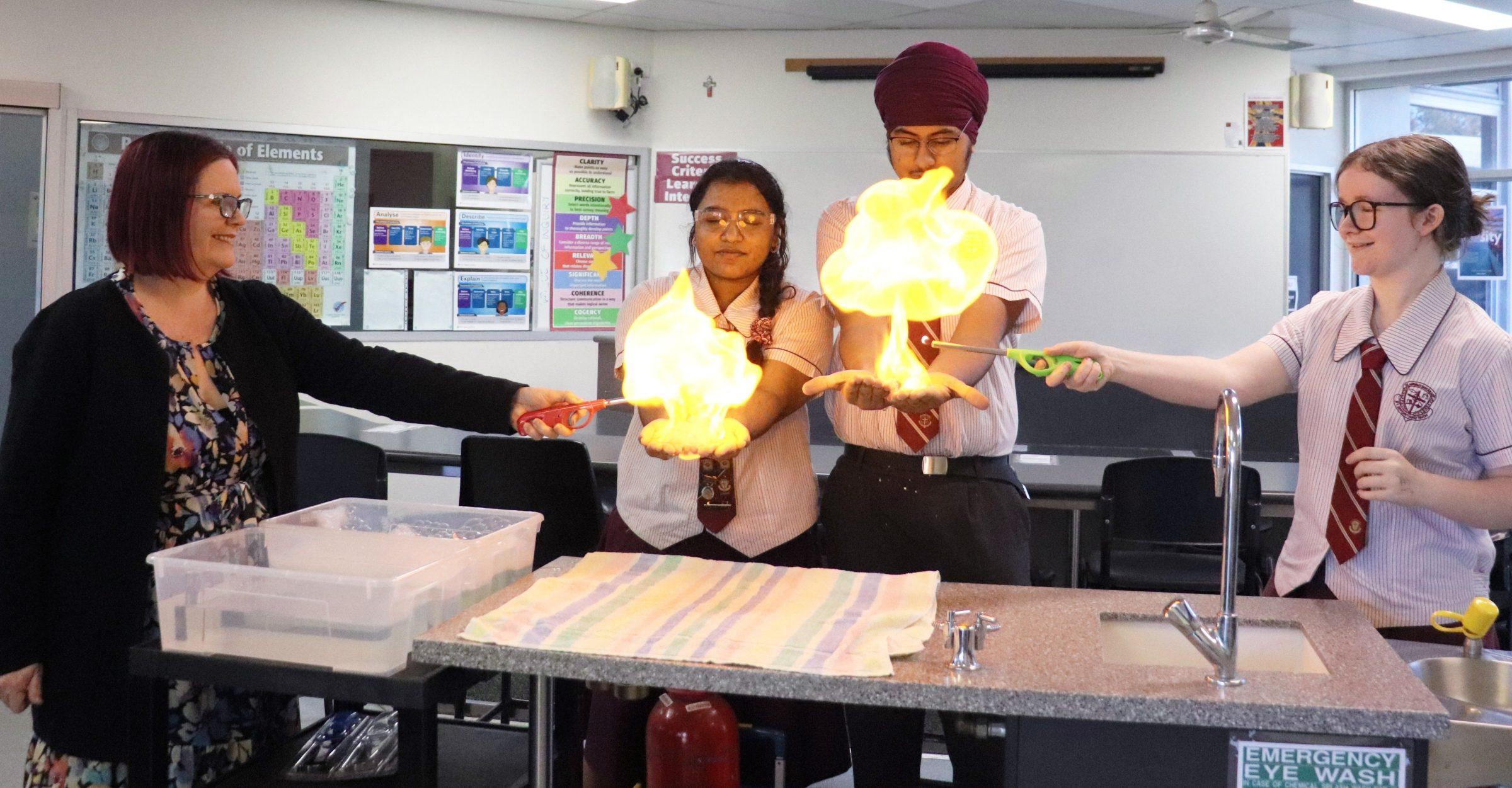
Today, Katrina continues to create opportunities for students through her leadership of science education and STEM initiatives. Her work has focused on building pathways that encourage young women to engage with science, technology, engineering and mathematics, including partnerships with Griffith University’s STEM Ambassadors program and the SuperGEMS Girls in Motorsports initiative. These opportunities provide students with authentic, hands on learning experiences and expand their understanding of the diverse opportunities available in STEM fields.
The power of relationships
For Katrina, some of the most significant moments in teaching are not marked by awards or achievements but by the relationships formed with students.
“The moments that have had the deepest impact on me are often those built through genuine connection,” she said.
Through these relationships she has witnessed the resilience of young people facing challenges beyond the classroom.
“Many students carry significant challenges, yet continue to show remarkable strength by turning up each day, engaging in learning and striving to move forward.”
These experiences serve as a constant reminder of the important role educators play in supporting and encouraging students throughout their journeys.
Faith at the heart of learning
Katrina believes her Catholic faith shapes every aspect of her teaching and leadership.
“My faith calls me to see and value the dignity of every student,” she said.
“It reminds me that education is not only about academic achievement, but about helping young people grow as whole persons who understand their worth, their responsibility to others and their capacity to contribute to the common good.”
In practice, this means creating learning environments where students feel known, respected, supported and challenged to grow.
“It also means modelling compassion, justice and service, and helping students understand that faith is lived through the choices we make every day.”
Educating for an uncertain world
In a rapidly changing society, Katrina believes Catholic education has an increasingly important role to play.
“Catholic education is pivotal now, more than ever, in this ever-changing and uncertain world,” she said.
By educating the whole person within a faith-centred community, Catholic schools help students connect their learning, values and actions.
“Faith is not something separate from life. It should be reflected in everything we do and practise.”
For Katrina, the enduring value of Catholic education lies in its commitment to human dignity, solidarity, subsidiarity, preferential care for the poor, the common good and care for our common home.
A community that shapes lives
When asked what she finds most rewarding about teaching in a Catholic school, Katrina’s answer is simple: the relationships.
“The relationships with staff, students and families in the community.”
Those relationships sit at the heart of her approach to education and leadership. Whether teaching senior Biology and Psychology, leading STEM innovation, or supporting colleagues and students alike, Katrina remains committed to helping young people flourish academically, personally and spiritually.
Her story is a powerful reminder that great teachers do more than teach subject content. They help students recognise their worth, build confidence in their abilities and inspire them to contribute positively to their communities and the world around them.