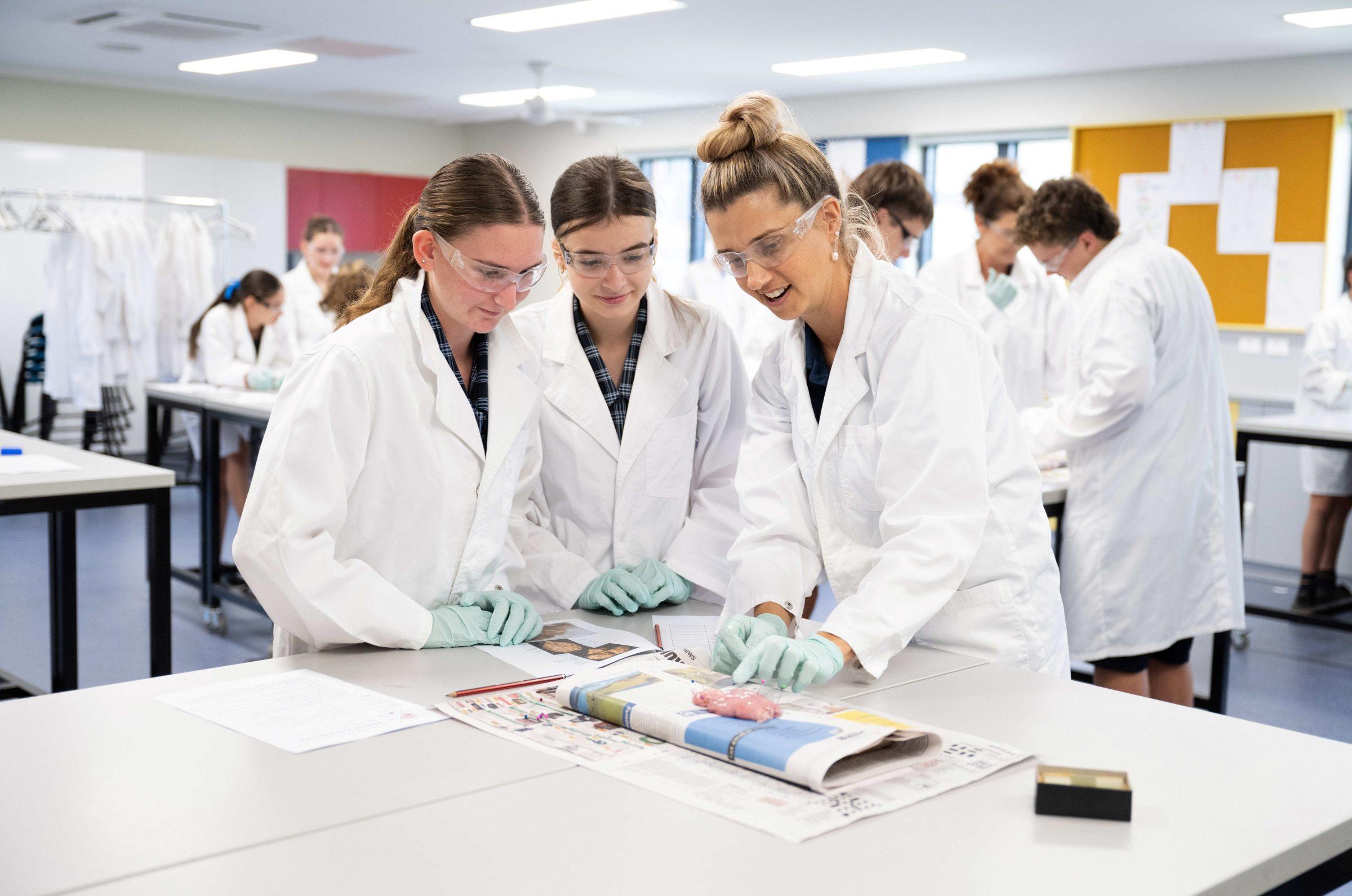
Some of Belinda Strong’s most important classrooms haven’t had four walls.
They’ve been coral reefs, rainforest canopies, university laboratories and international STEM competitions.
As Science Academic Leader at Gilroy Santa Maria College in Ingham, Belinda is passionate about creating the kinds of experiences that challenge students to step outside their comfort zones and discover what they’re capable of. Whether it’s a field trip to Orpheus Island, a research experience in the Daintree or a student team’s journey to a world STEM competition in Germany, her goal is the same: to help young people see that their future is filled with possibilities.
It’s a philosophy shaped by her own life.
“I was never someone who had a clear plan about becoming a teacher,” Belinda said.
Instead, she followed her curiosity.
After studying marine biology and environmental science, she travelled extensively and worked across a range of industries, including tourism, events, business management and scuba diving instruction. Looking back, she now sees those experiences as one of her greatest assets as an educator.
“They taught me that there is not one single pathway to success,” she said.
The confidence to take a chance
It was while teaching people to scuba dive that Belinda first recognised the part of teaching she loved most.
“I enjoyed helping people overcome challenges, step outside their comfort zones and achieve things they initially didn’t think they could do.”
Later, while working as an art gallery assistant after having children, a supervisor suggested she consider teaching. That encouragement stayed with her.
“Sometimes it only takes one person to see potential in you and encourage you to consider a pathway you may never have imagined for yourself.”
Today, she hopes to be that person for her students.
Opening doors
One of Belinda’s proudest achievements began as a small lunchtime STEM activity.
Over time, it grew into a high-performing STEM program that saw students win the North Queensland Hydrogen Grand Prix and earn the opportunity to represent Australia at the Hydrogen Grand Prix World Finals in Germany.
For some students, it was the first time they had travelled overseas. For others, it was the first time they had even stepped onto a plane.
“They found themselves leading, presenting, engineering and working alongside teams from around the world,” Belinda said.
For her, the experience reinforced a powerful lesson.
“Teaching extends well beyond the classroom. Sometimes our role is simply to create opportunities and then help students realise they are capable of taking them.”
Behind the scenes, that often meant writing grant applications, seeking sponsorships, building industry partnerships and advocating tirelessly on behalf of students.
The reward came when students began seeing themselves differently.
“Watching young people realise they are capable of more than they first believed is when I feel I have made the greatest difference.”
The moments students surprise themselves
While STEM competitions attract plenty of attention, many of Belinda’s favourite teaching moments happen far from any trophy or award.
She speaks just as enthusiastically about students who overcome a fear of snorkelling during a biology camp, scale a rainforest canopy crane despite a fear of heights, or discover a passion for scientific fieldwork they never knew existed.
Over the years she has established opportunities including the College’s annual Orpheus Island Biology Camp, experiences at the Daintree Rainforest Observatory and partnerships with universities and industry. For some students, these experiences become turning points.
“They start to see themselves differently,” she said. “Some of the most powerful feedback I’ve received has come from students and families who tell me these opportunities changed what they believed was possible for themselves.”
More than marks and results
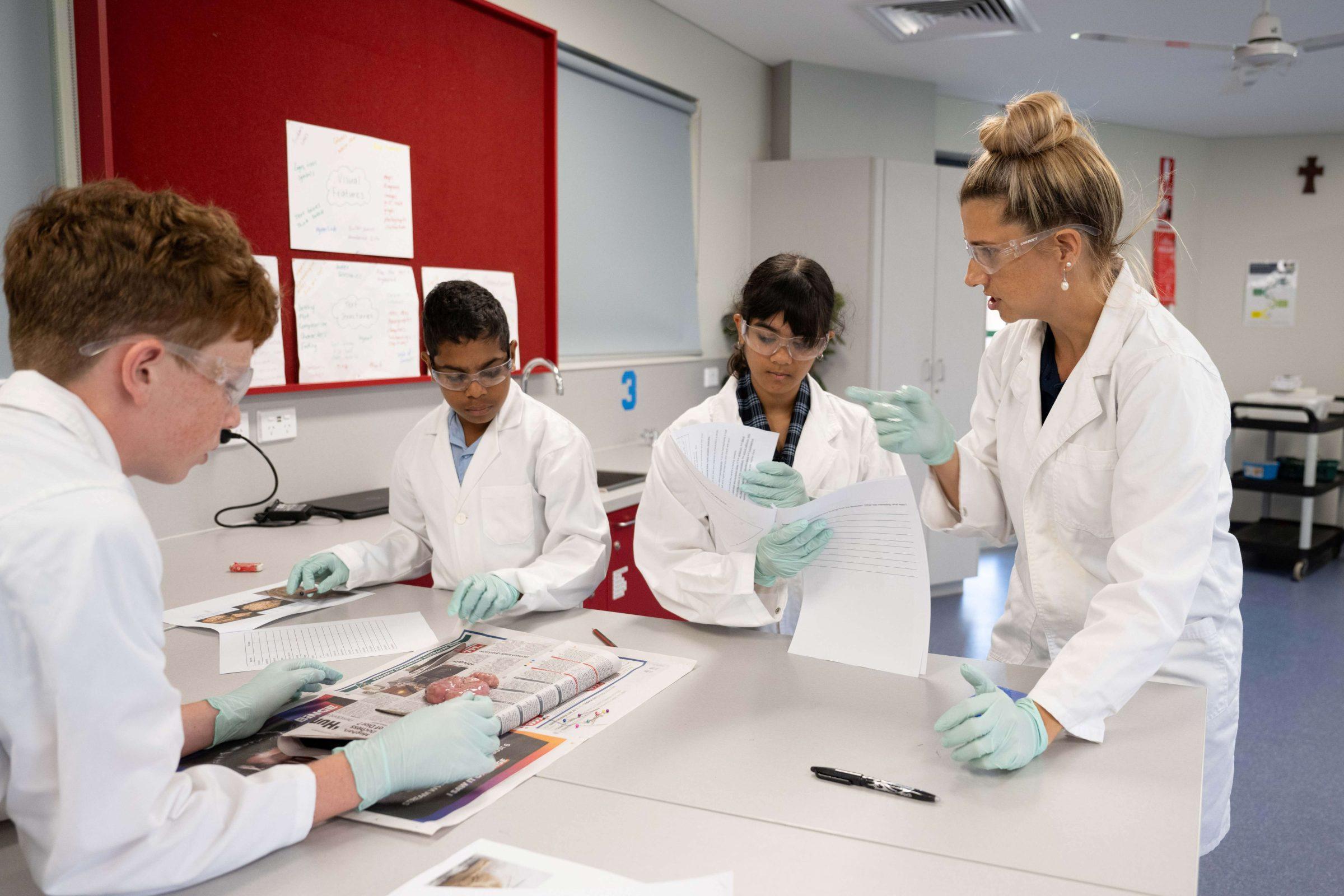
At the heart of Belinda’s approach is a belief that education should be about much more than academic achievement. Working in Catholic education has reinforced the importance of helping students grow as people as well as learners.
“I believe every young person has unique strengths and potential, and my role is to help them discover and develop those gifts.”
Creating environments where students feel safe to challenge themselves, make mistakes and keep trying is central to her work.
It’s also one of the reasons she values Catholic education so highly.
“Being part of a community that values relationships and the development of young people beyond academic achievement is incredibly rewarding.”
A world of possibilities
In a rapidly changing world, Belinda believes schools have a responsibility to equip young people with more than content knowledge.
Resilience, empathy, curiosity and confidence matter just as much.
“Catholic education helps students develop a strong sense of purpose, belonging and responsibility,” she said.
“It helps them recognise their strengths, support others and understand the impact they can have.”
Ultimately, Belinda hopes students leave school with the confidence to take opportunities when they arise, even if those opportunities lead somewhere unexpected.
After all, her own journey from marine biology student to scuba diving instructor to science leader and educator is proof that the most rewarding paths are not always the ones you planned from the beginning.