On a busy Friday evening in a Gladstone restaurant, Andrew Perrett spotted one of his students sitting quietly in the corner.
While diners came and went, the young man balanced schoolwork with helping his family run their business. Between clearing tables, serving customers and helping in the restaurant, he was completing the tasks Andrew had set for his class.
For Andrew, the moment was a powerful lesson.
It spoke of sacrifice, determination and the value a family placed on education. Decades later, he still remembers that student, Tuan, who would go on to become a successful restauranteur.
After more than 40 years in education, it is moments like these that remain with Andrew. They are reminders that teaching is not only about academic achievement but about helping young people develop the character, resilience and values that will guide them throughout their lives.
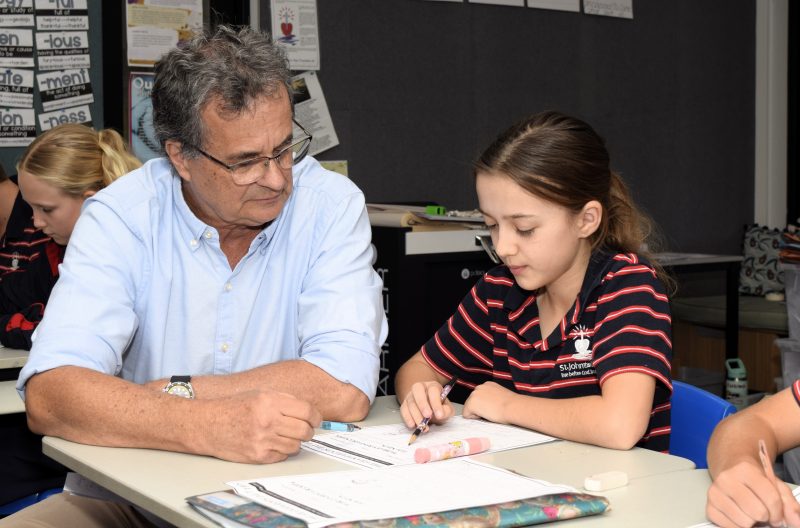
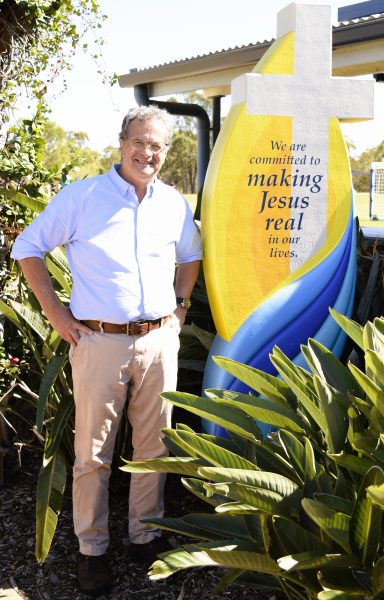
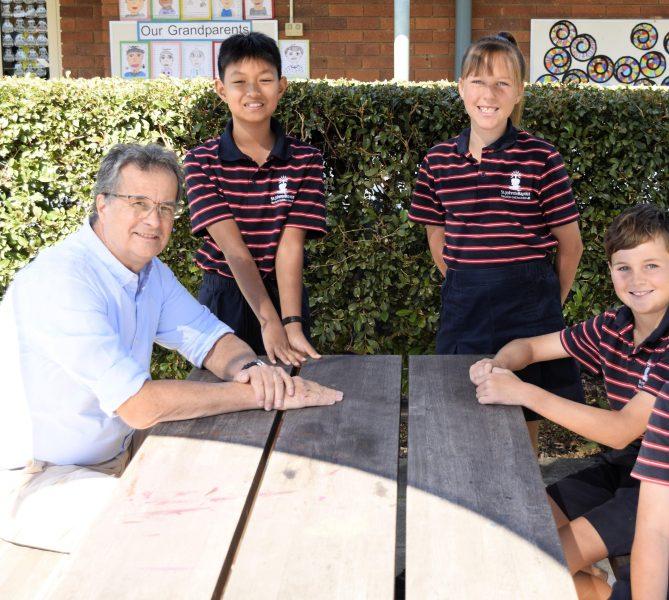
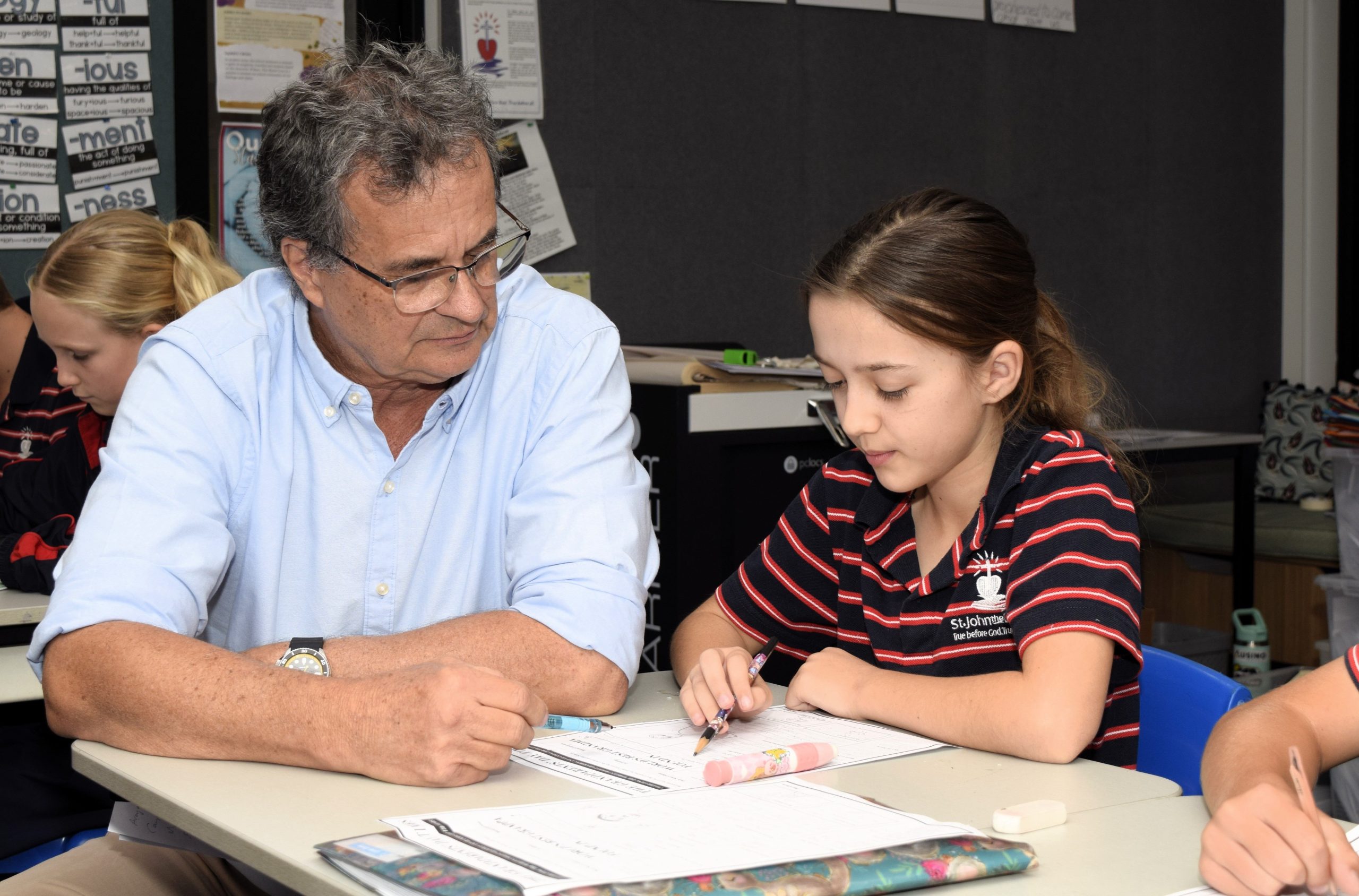
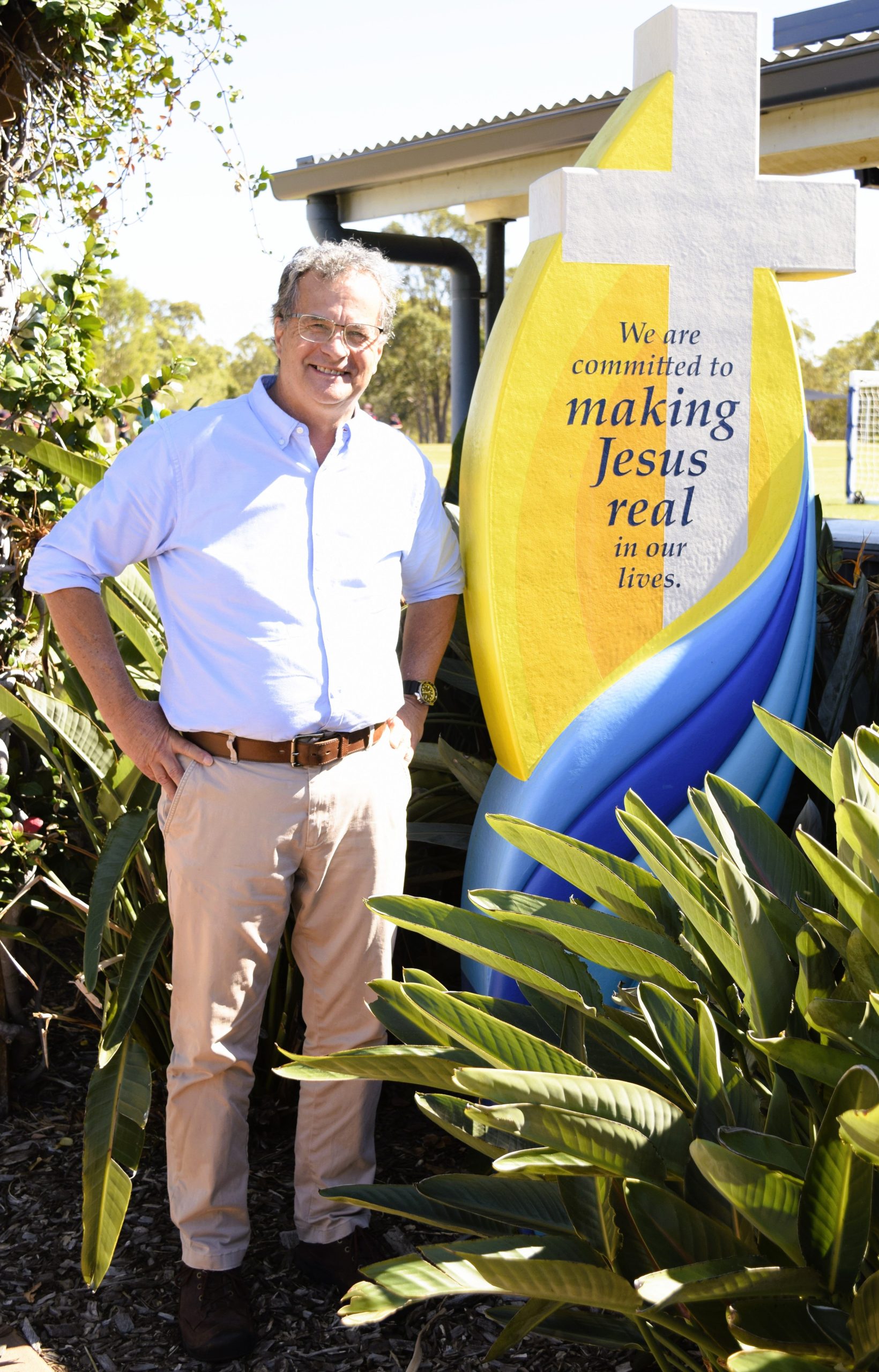
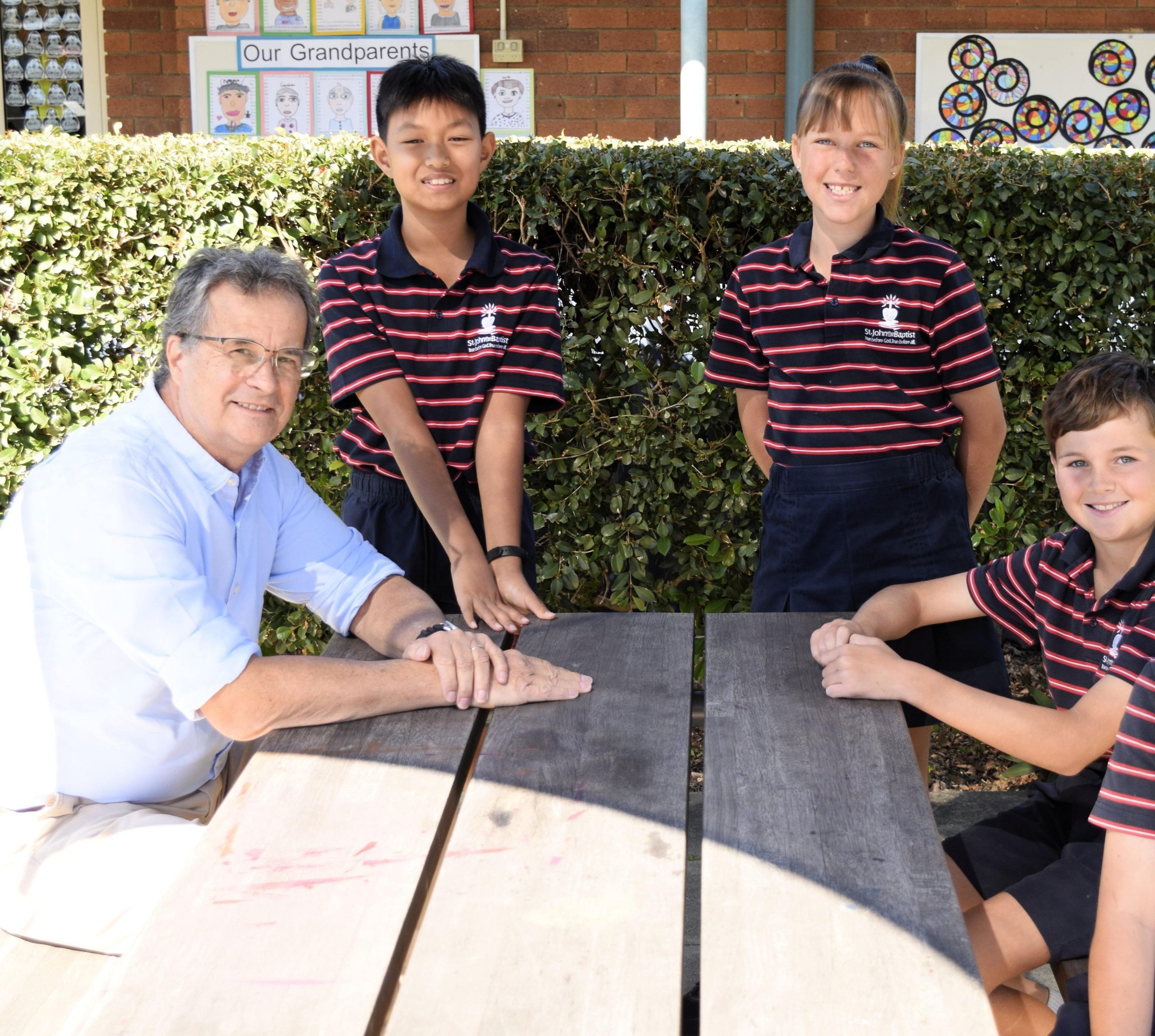
Today, Andrew teaches at St John the Baptist Catholic Primary School, Gladstone, where he continues to inspire students through the same philosophy that has guided him throughout his career: that the most important lessons are often the ones that shape who we become.
An accidental teacher
Andrew sometimes describes himself as an “accidental teacher”.
After finishing secondary school, he was uncertain about what came next.
“I was directionless, in a fog about my future and applying for everything,” he recalled.
In 1983, almost by chance, he enrolled at McAuley Teachers College in Brisbane, which later became part of Australian Catholic University. Looking back, he sees something more than chance at work.
“While at the time I considered myself an accidental teacher, I now appreciate the fact that a divine plan of sorts had been at work.”
More than four decades later, he remains in the classroom and continues to find joy and purpose in the profession.
Learning from a great teacher
When asked what inspired him to teach, Andrew immediately thinks of one person.
A secondary school history teacher helped shape not only his career choice, but the educator he would become.
While Andrew loved history, it was not the subject knowledge that left the biggest impression. His teacher made students feel that they mattered.
Through simple conversations at the beginning of lessons, he took the time to learn about their interests, their lives and who they were as people. From that experience, Andrew learnt a lesson that has guided his own practice ever since.
“As a teacher, students will probably remember their time with you not so much for what you taught them curriculum-wise, but more for who you are as a person.”
Small lessons, big impact
One of the most profound reminders of the influence teachers can have came after a lesson on Catholic Social Teaching.
Andrew had shown his students a short video about a young African girl who spent her days carrying heavy containers of water back to her village. The following day, one student approached him and placed all of his pocket money into Andrew’s hand. The money had been earned by helping neighbours with gardening jobs. The child’s explanation was simple.
“She needs it more than I do.”
For Andrew, the gesture captured something important about Catholic education.
“It reminded me of the privileged position teachers have and of the importance of the holistic nature of Catholic education.” The lesson had not simply taught knowledge. It had inspired compassion
Dignity, inclusion and kindness
Andrew’s faith is central to his approach as an educator.
He draws particular inspiration from Fratelli Tutti, Pope Francis’ encyclical on fraternity and social friendship, which emphasises the dignity and worth of every person.
The message challenges him to continually ask a simple question.
“What can I do to accommodate a student and make them feel valued?”
Whether students are facing learning difficulties, social challenges or other barriers, Andrew believes educators have a responsibility to ensure every child feels included and respected.
Of all the compliments students have given him over the years, one stands above the rest.
“Being told that I am a kind man means a great deal to me,” he said.
“It reinforces the fact that I have in some way reflected Jesus’ teaching to love one another as God loves us.”
A school community built on belonging
For Andrew, one of the greatest rewards of teaching in a Catholic school is the sense of family.
Not family in the traditional sense, but a community connected by support, belonging and a shared commitment to helping one another thrive.
Whether gathering for prayer, celebrating Mass or supporting one another through challenges, he sees Catholic schools as places where people come together around a common purpose.
“It is a reason for being and reminds me why I am proud to be an educator,” he said.
Providing a compass for life
Andrew believes Catholic education plays an increasingly important role in helping young people navigate a complex world.
“Catholic schools provide a compass,” he said.
By encouraging students to respect God, themselves and others, schools create a strong foundation for life.
Importantly, he believes this purpose extends beyond Catholic families. Many families choose Catholic education because they value the emphasis on compassion, service and community. For Andrew, these values represent the enduring strength of Catholic education.
After more than four decades in the classroom, he remains convinced that while academic success matters, the most important lessons are often the ones students carry with them long after they leave school.
The lessons about kindness. About dignity. About belonging. And about the difference one person can make in the life of another.